

Shell Yea
The case for conchs, scallops, and crustaceans in art, architecture, and fashion...


This likely should have been my Art History major thesis. It’s simply flowing through my fingertips in a way my research never, ever, could. I suppose that’s what happens when you simply love the motif of the moment. Yet, this is not the shell’s first time in mainstream media at all…
There's a reason Botticelli put Venus on one!
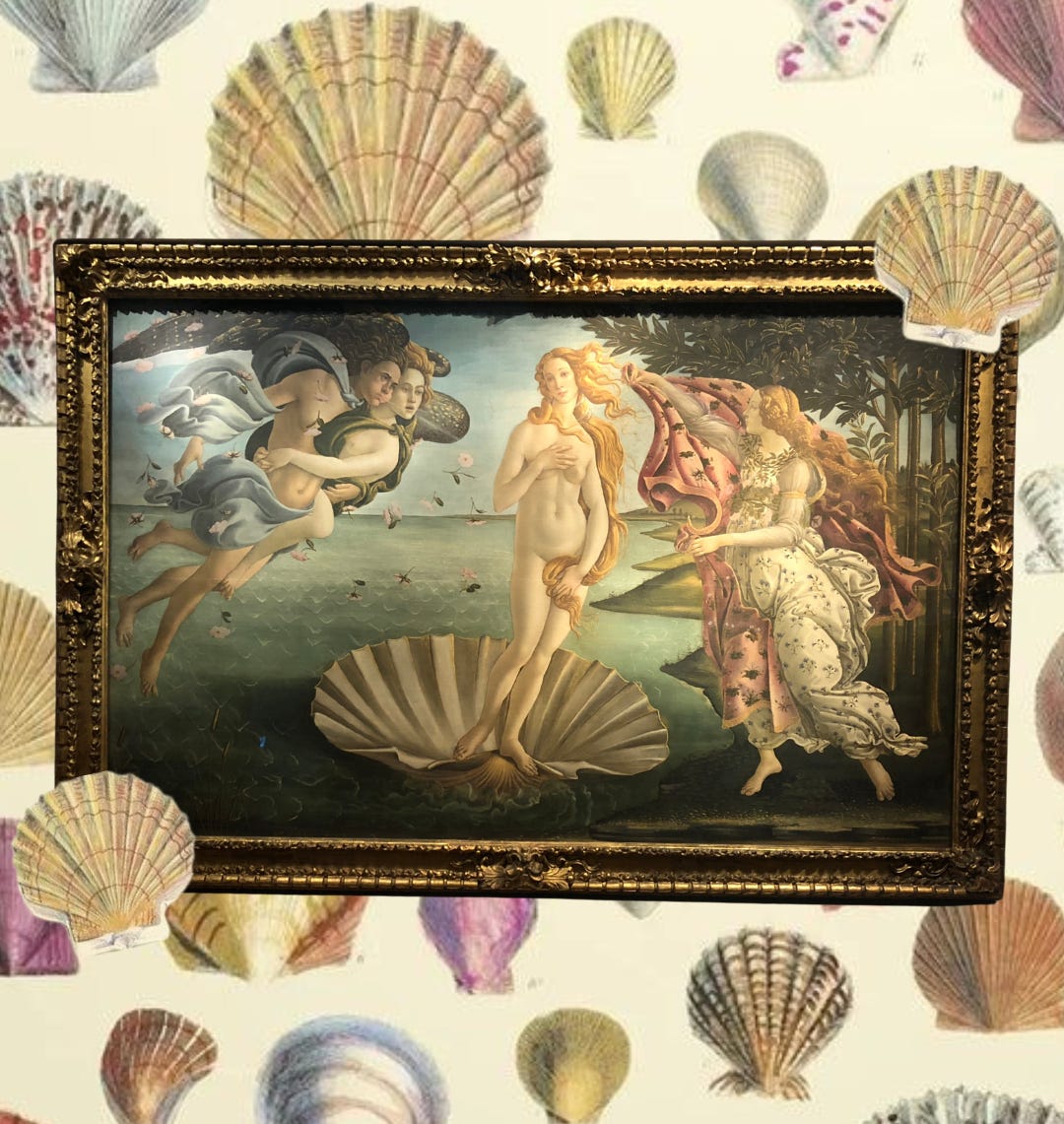
The scallop shell has been a stand-in for beauty, divinity, and the feminine ideal since before anyone was calling anything a motif. It’s in the painting everyone knows, yes, but it’s also in the moulding of your favorite hotel, the column capital you walked past without looking, the grotto at the end of some overgrown garden. The shell has been doing its thing, quietly and perfectly, in nature forever. Its natural state has inspired centuries of impactful art, architecture, fashion, jewelry, and more! It doesn’t need a season.
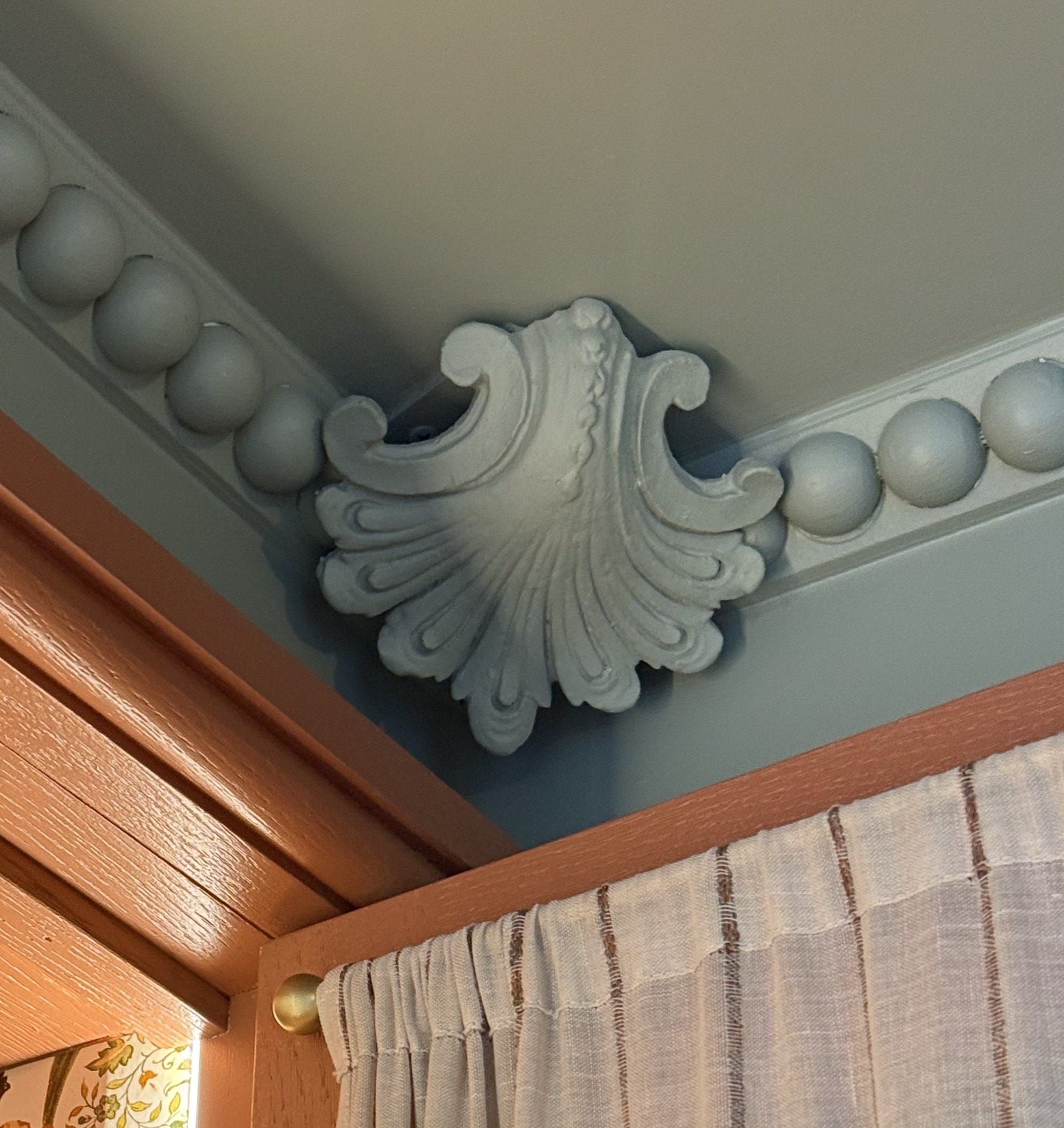
The form itself is the thing — a spiral that starts from a single point and expands outward, perfectly. Bilateral symmetry so precise it reads as intentional, which, of course, it is, just not by anyone’s hand. Nature solved the shell a long time ago, and designers, architects, and artists have been working from that solution ever since. Not borrowing it, but returning to it.
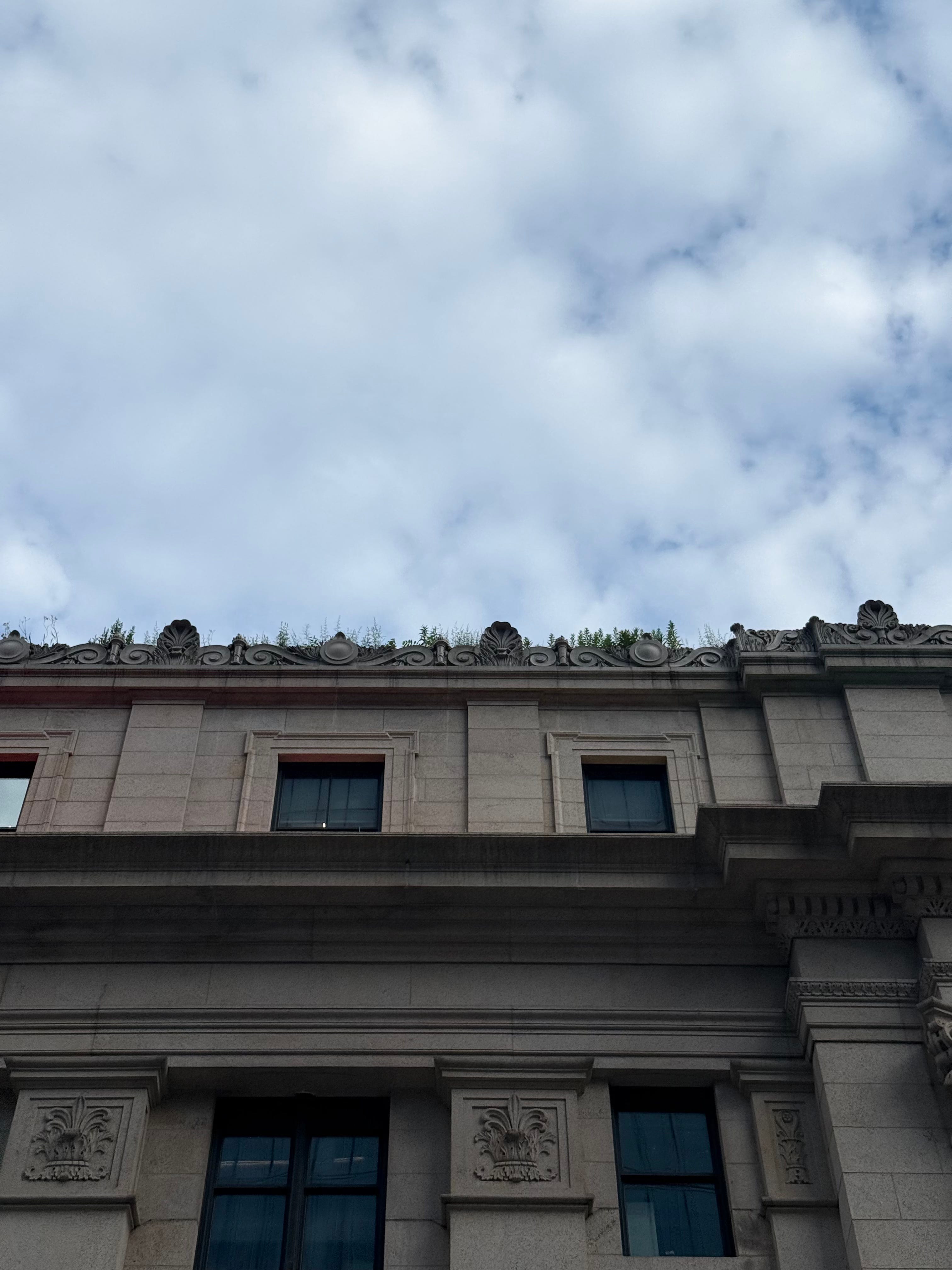
Architects understood this early. Look up, rip your sunnies off and take a gander, at the cornice of Moynihan Train Hall and you’ll find them there; shells worked into the Beaux-Arts ornament of a building most people rush through without a second glance. The scallop turns up in Roman niches, Byzantine apses, the fan vaulting of English Gothic cathedrals. Camino de Santiago, the great pilgrimage in Spain, takes the scallop as its symbol entirely!!! Pilgrims carried shells to mark the journey to Santiago de Compostela. I remember the jealousy I felt when my college roommate, Brucie Porter, returned from her summer voyage with a scallop tat on her ankle. A reminder of her time spent on the Camino for 6 weeks. The shell continues to symbolize: I went somewhere and I came back changed.
Leave it to the surrealists to understand the shell differently—not as symbol, not as ornament, but as provocation. The shell is a strange object. Hard on the outside, once alive on the inside. A perfect spiral nature made without trying. Beautiful and slightly uncanny, which is exactly where Dalí and Schiaparelli liked to live.
Their lobster was the whole argument. Dalí made a phone out of one. Schiaparelli brilliantly put one on a dress, the one she made for Wallis Simpson, the American divorcée who scandalized an entire monarchy and wore a crustacean on her body like it was the most natural thing in the world, but the intent was not lost. Once a scandal always a scandal! Wallis went to my high school many moons ago, and my friend Virginia and I often joked about her…I think about that every time I see the dress. I was tickled to have witnessed in person at the must see Schiaparelli exhibit at the V&A in June.


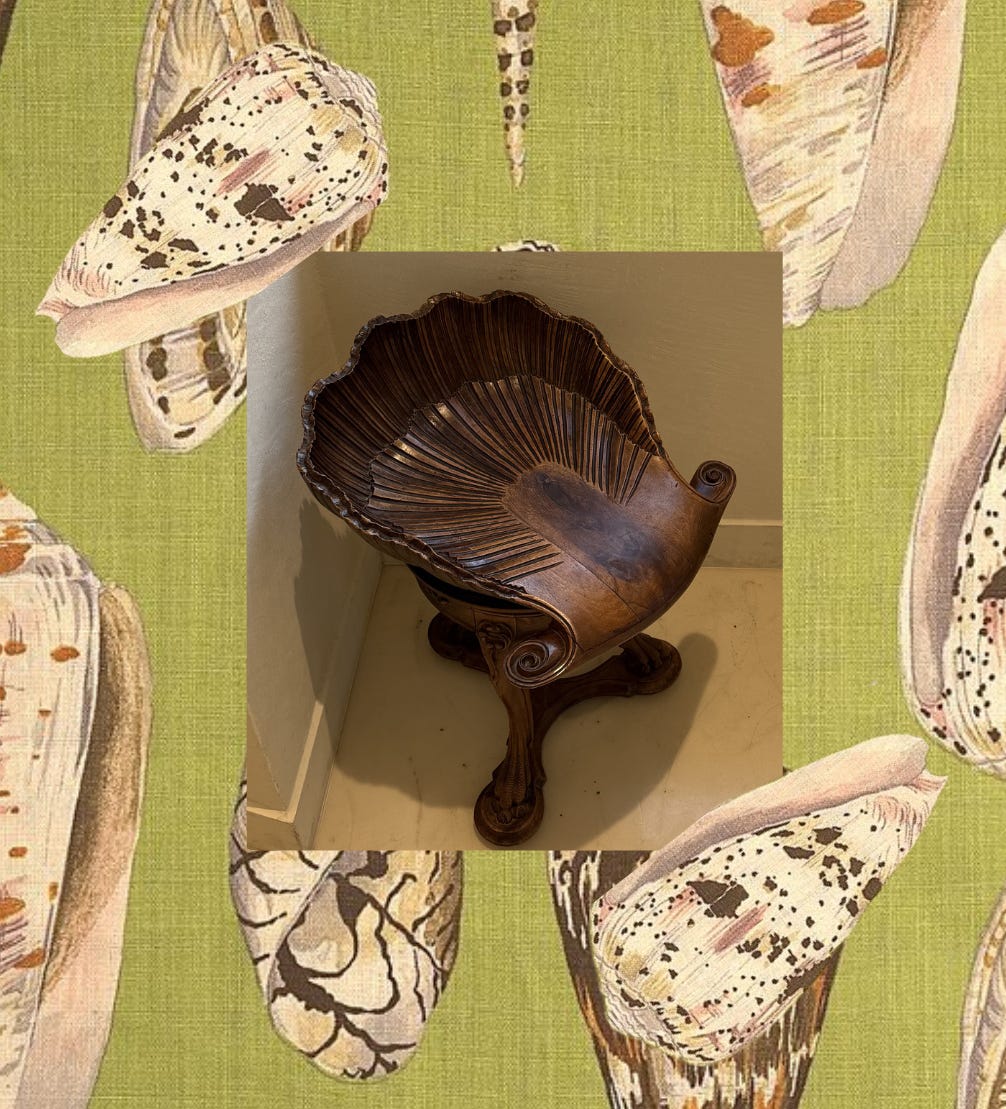
The shell in surrealism is the shell at its most honest, an object that has always been a little too perfect, a little too strange, to be just decoration. Schiaparelli knew it. And the designers who keep returning to it know it too. One of my favorite brands, Loulou Studio, now Loulou de Saison, has used the scallop as its symbol since its debut in 2019. Their store in Paris, designed by Studio Henry, is home to my favorite surprise & delight retail feature — the shell stool.
Which brings us to the jewelry. Shell necklaces old and new are doing slightly different things, but they’re in conversation. The one your grandmother had, probably coral or mother of pearl, probably paired with something ladylike, carried a certain kind of intention. Like this gorgeous conch necklace of my mom’s…I ask to wear it any chance I get…
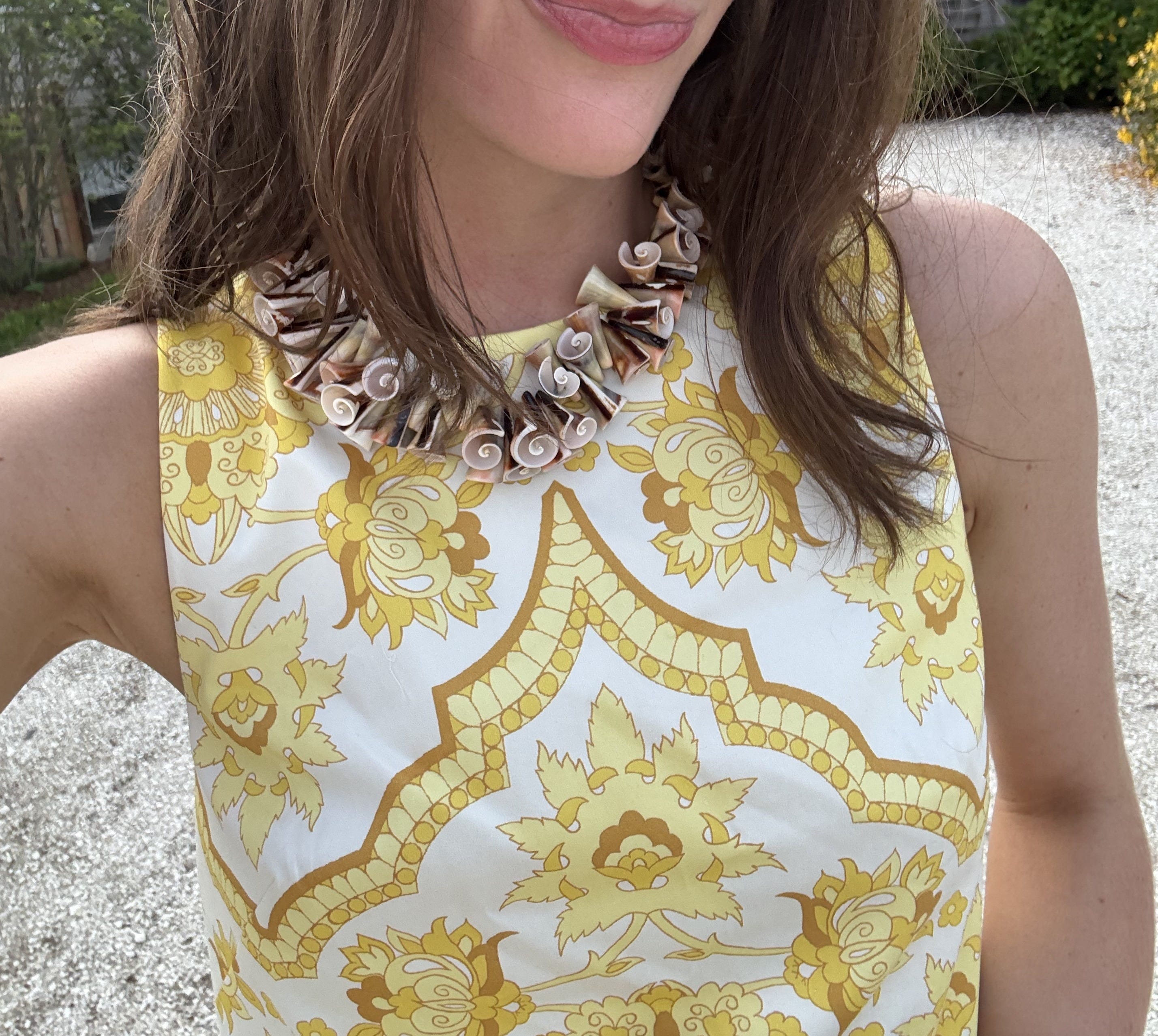
And then Juju Vera came along.
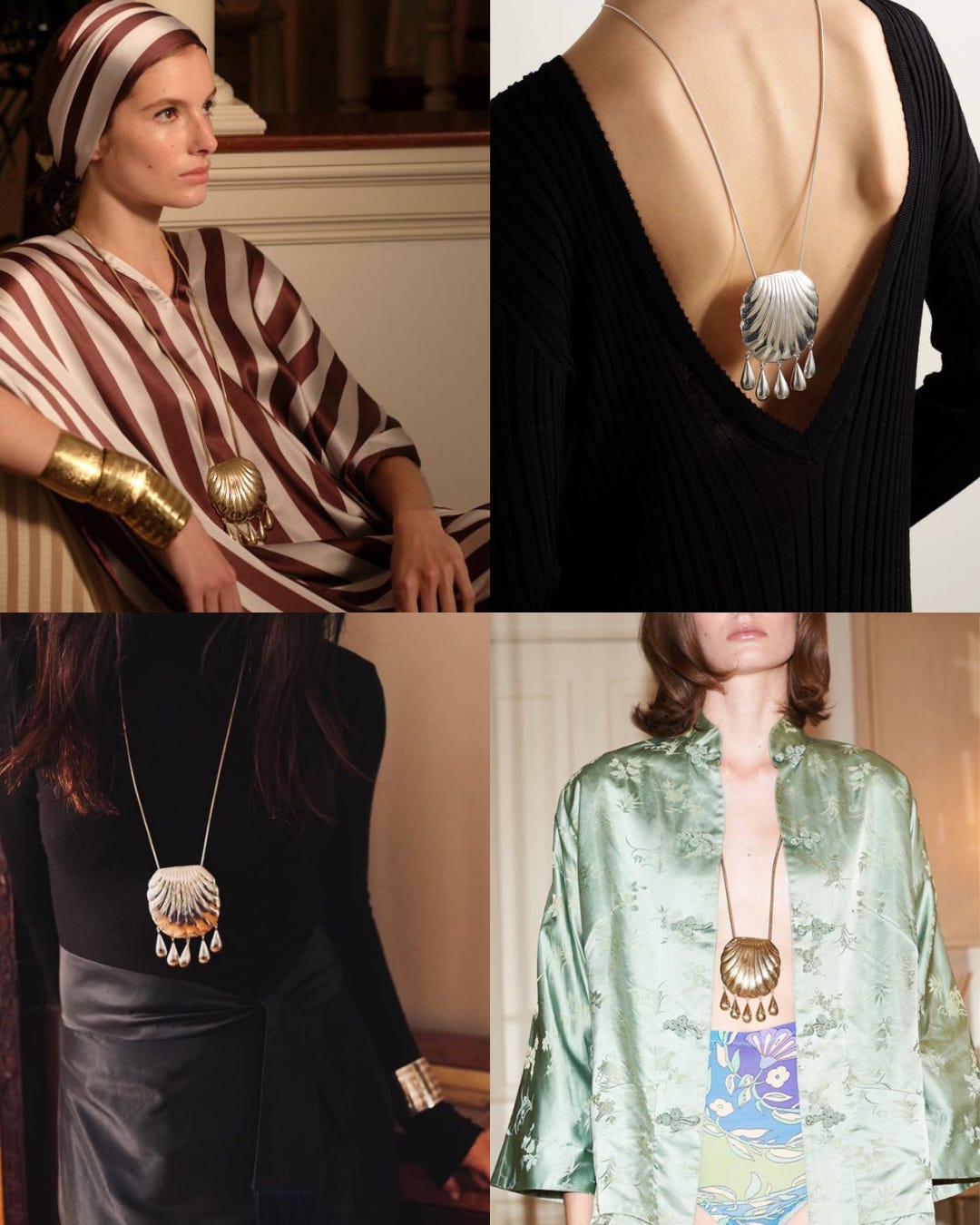
Julia Ferentinos launched the brand in 2024 and her shell pendant spread the way good things do: no campaign, just the right women wearing it. Bold, architectural, elegant without trying too hard. It made its way from the UES to London to LA in what felt like a single season, and it didn’t feel like a trend…at first. And then it definitely did; curse you virality.
Shell jewelry has always felt inherently happy, a little sun-soaked, the thing you reach for in July. What Juju Vera got so right is that it doesn't have to be. The Petra is the kind of piece you layer over a turtleneck in January just as easily as you wear it thrown over your go-to cotton dress in August. Sculptural enough to hold its own in any season, which is exactly what the best shell motifs — in architecture, in art, in fashion — have always done.
The beauty in shells is their collectable nature. The way something natural can feel like it was made for you. I’ve kept a shellbox for years. My grandmother kept a storied shell bowl. My mom still scatters them around the house — on the coffee table, the front entry, the bookshelf — not as décor exactly, more as objects that just belong. Treasured in the way only something found can be.
Okay. A word on shopping the shell: it goes kitsch fast, and honestly, sometimes that's the whole point. But the ones worth wearing, and collecting, look expensive and a little found. You want something with a past life. That said! Shell we shop?!?!
